Grado IX – Maestro Elegido de los Nueve
Tercera Clase – Grado 9º – Sexto Capitular

Tercera Clase – Grado 9º – Sexto Capitular
Tercera Clase – Grado 9º – Sexto Capitular
Tercera Clase – Grado 9º – Sexto Capitular
Este grado centra su simbolismo en la venganza del asesinato de Hiram Abiff y a la muerte sumaria y sin formación de causa de uno de los asesinos, por mano de uno de los nueve elegidos. Las ideas de venganza que aparecían vagas e indeterminadas en los grados precedentes, se manifiestan aquí aparentemente potentes y terribles.
El eje simbólico de este grado es la venganza de la muerte de Hiram, entendida como un enfrentamiento con el Ego.
Su meditación es la auto-observación y labor de transmutación de los defectos en virtudes. Las palabras “matar” o “aniquilar” deben ser consideradas como “transmutar” o “transformar”. Perseo y la Medusa.
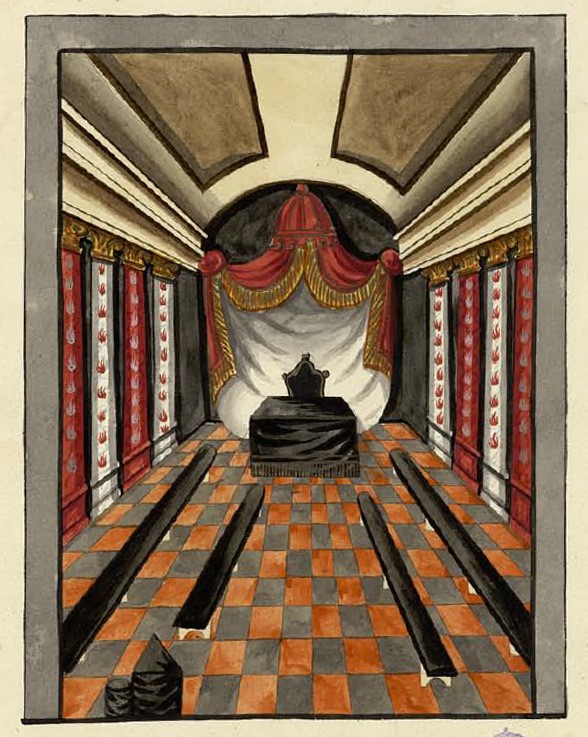
La decoración de la Logia es con tapicería negra, sembrada de llamas. La sala se halla decorada con columnas blancas y negras; nueve luces, ocho reunidas en un solo grupo y una separada, iluminan el recinto. Los mazos de los Vigilantes se hallan sustituidos por puñales.
NINTH DEGREE. MASTER-ELECT OF NINE.
The ninth degree, or sixth of Perfection, is called the Master-Elect of nine. The traditional history refers to the punishment of certain traitors who had been engaged in the tragedy which forms the subject of the third degree.
It exemplifies the truth of the maxim that the punishment of crime, though some- times slow, is ever sure; and it illustrates the binding nature of the Masonic obligations.
The meetings in this degree are called Chapters. TheChapter room is draped in black, and is supported by columns, red and white mixed, and sprinkled with flames. It is lighted by nine lights,— eight in a group and one by itself. The apron is white, spotted with red, and lined with black.
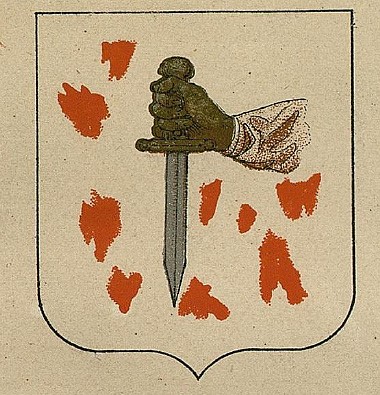
Upon the flap is painted or embroidered a hand holding a poignard. The cordon is a broad black ribbon from the left shoulder to the right haunch. At the extremity are nine red rosettes,—four on each side and one in the centre. From the centre is suspended a poignard.
Loth, J. (1875). The ancient and accepted scottish rite Ilustrations of the emblems of the thirty – three degrees. Simpkin, Marschall, & Co. https://archive.org/details/cu31924030318541